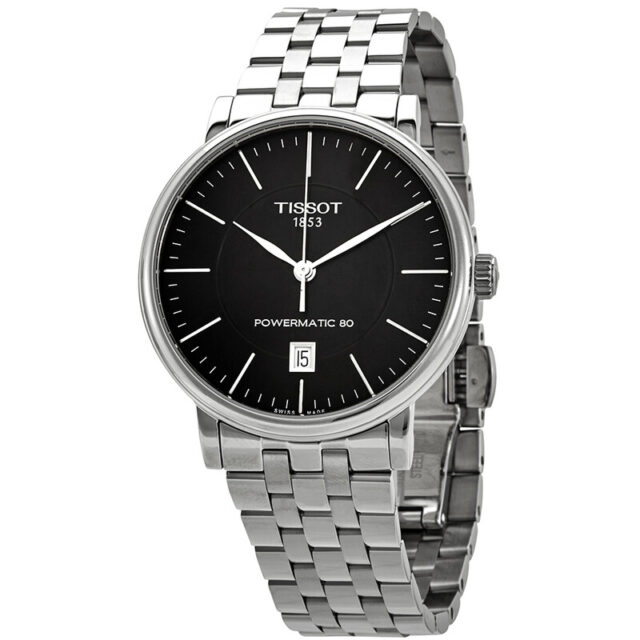
There is a pattern that repeats itself in watch communities, online forums, and conversations between enthusiasts: someone asks for a recommendation for a first proper watch, or a reliable daily wearer, or something versatile enough to go from the office to the weekend without looking out of place. Tissot comes up almost every time. The reasons for that consistency are worth understanding, because they say something real about what the brand delivers rather than just reflecting marketing spend. If you are considering where to shop Tissot watches and want to make a confident choice, knowing the range and what distinguishes each line makes the decision considerably simpler.
The case for Tissot as a first serious watch
A first serious watch is a specific kind of purchase. It needs to perform reliably, look appropriate across a range of settings, hold up to daily wear, and ideally offer a movement worth understanding. Tissot satisfies all four criteria without requiring a significant compromise on any of them.
The brand is part of the Swatch Group, which means access to ETA movement architecture, group-level research into materials, and a distribution and servicing network that spans most of the world. For a buyer who wants the reassurance of knowing that their watch can be serviced in most major cities, that infrastructure matters more than it might initially appear.
The Swiss Made designation on Tissot pieces reflects a legal standard that requires a significant proportion of the movement to be manufactured in Switzerland and the final inspection to take place there. It is not a guarantee of any particular quality ceiling, but it does set a floor that brands manufacturing entirely outside Switzerland are not held to.
The collections at a glance
T-Classic
The everyday and dress watch range, covering the Le Locle, the Tradition, and the Everytime among others. Clean dials, modest case sizes in most references, and a movement quality that regularly surprises buyers who have not previously owned a Swiss watch. The Le Locle in particular has a strong following as a versatile dress piece that works with both formal and smart casual wardrobes.
PRX
The standout model of the past several years, generating sustained attention from enthusiasts and first-time buyers alike. The PRX takes its design language from a 1970s reference, with an integrated bracelet and a modernist dial geometry that fits into the contemporary watch aesthetic as naturally as anything currently in production. Available in quartz and automatic versions, with the automatic Powermatic 80 offering 80 hours of power reserve. The PRX has the unusual quality of looking considerably more expensive than it is, which is either a practical advantage or an aesthetic concern depending on your perspective.
T-Sport
Covers the Seastar diver line and the T-Race motorsport-influenced collection. The Seastar 1000 carries ISO 6425 diver certification and 300 metres of water resistance, making it a genuine functional dive watch rather than a water-resistant dress piece wearing diver aesthetics. For buyers who want a sports watch that can be worn in the water rather than just near it, the Seastar is the reference to consider.
T-Touch
A technically distinct line that incorporates touch-sensitive crystal technology, giving access to compass, altimeter, and meteorological functions. It occupies its own niche within the Tissot range and appeals to buyers who want functional utility beyond timekeeping in a Swiss-made case.
What to look for when comparing references
Dial legibility is worth prioritising over visual complexity. A watch worn daily earns its place through how easily it reads in a glance, not through how interesting it looks under examination. Tissot’s cleaner references in the T-Classic and PRX lines tend to hold up better over years of daily wear than more elaborately designed dials that initially catch the eye.
Bracelet quality is one of the areas where the difference between Tissot and cheaper alternatives is most immediately felt. The integrated bracelets on the PRX and the solid link options on the Seastar are noticeably better constructed than what comparable spending delivers from fashion watch brands. The clasp mechanisms in particular are solid and adjusted easily, which matters more over time than buyers tend to anticipate at the point of purchase.
Movement choice between quartz and automatic comes down to how you want to relate to the watch. Quartz is more accurate, requires no daily wear to stay running, and costs less to service. Automatic offers the experience of a self-winding mechanical movement and connects to a longer watchmaking tradition. Both are legitimate choices; the distinction is about preference rather than objective quality.
Getting the size right
Case diameter and lug-to-lug measurement are the two numbers that determine whether a watch will sit well on a given wrist. Tissot publishes both for each reference, and taking a few minutes to compare those dimensions against an existing watch that fits well saves the frustration of receiving a piece that looks proportionally wrong on the wrist. Most of the T-Classic range runs between 38 and 42 millimetres. The PRX is available at 35 and 40 millimetres, with the smaller size having found a strong following among buyers who prefer a less dominant case presence.