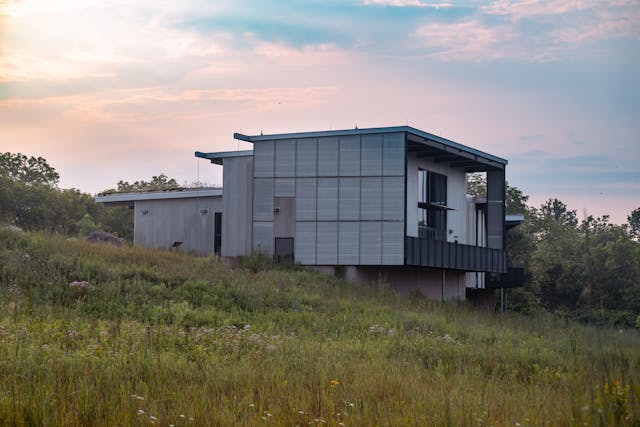
 Sustainable housing is increasing in popularity. People want eco-friendly housing that will reduce their environmental impact throughout the structure’s life cycle. In the past, home buyers would often focus on energy efficiency. Today, they are taking a more holistic approach to eco-friendly housing.
As Foxes Sell Faster explains, 37% of global carbon emissions today come from buildings and construction. The problem will only worsen in the coming years unless sustainable practices become commonplace. As a result, people have a new perspective on modern homes. They seek sustainable housing that allows them to live in harmony with nature without compromising the comforts of modern technology.
Sustainable Housing
Sustainable housing has come a long way in the past decade. Thanks to innovative technologies and design approaches, people are discovering they can lead an eco-friendly lifestyle in their homes. To be eco-friendly, a house must be energy efficient and make use of renewable energy generation. It starts with the materials used to build the home.
Sustainable Building Materials
Sustainable building materials form the foundation for sustainable housing. Bio-based materials are now being used for insulation, and bamboo composites are reducing the structural weight of the home by almost 40% when used in place of traditional lumber. Load requirements are not sacrificed when the substitute is used.
Self-healing concrete can repair itself through biochemical reactions, reducing the need for maintenance while extending the life of the foundation by up to 50 years. Transparent solar panels are being used in place of windows to generate electricity, and solar roof tiles cost less than high-end conventional roofing when a person factors in energy production.
Energy Systems
Energy efficiency remains a hallmark of sustainable homes. When choosing an energy system for a home, the owner must consider the local climate because it plays a significant role in determining which material should be used and how the system should be arranged. The owner must consider the home’s orientation, its existing insulation, and natural heating and cooling features. Solar panels are increasing in popularity thanks to advances in this industry, and many homes now benefit from community microgrids. Homeowners might also wish to consider geothermal heating and cooling options to protect the planet while keeping the house at a comfortable temperature.
Water Conservation
Many homeowners are choosing to have rainwater harvesting systems to conserve residential water. An advanced harvesting system can reduce the home’s water consumption by up to 50%, while offering innovative filtration that automatically adjusts based on the water quality. Graywater recycling is also becoming more commonplace as it allows gently used water to be used for non-potable purposes, such as flushing the toilet or irrigating the garden.
Many homeowners are installing water-efficient fixtures and appliances to reduce their indoor water usage by up to 30%. Thanks to innovations, they no longer need to sacrifice performance to conserve water indoors. They are also choosing to extend their water conservation to the exterior of the home by planting drought-resistant landscaping using native plants. This one step can reduce their outdoor water usage by up to 75%.
These are only a few of the many ways people are making their homes more eco-friendly. Smart home technology is helping in this, and countless homeowners are choosing to retrofit their existing homes to make them more sustainable. Building manufacturers aren’t stopping here, however. They continue to look for ways to transform housing and make it more sustainable. Thanks to their work, housing is now looking to actively improve the environment rather than just protecting it from harm