Why Indoor Green Spaces Matter
Indoor greenery changes how a room feels in ways that go well beyond aesthetics. Whether you gravitate toward a few compact succulents on a windowsill or a huge indoor plant anchoring an entire living area, thoughtful planning can turn almost any interior into a calming, low-maintenance green retreat. Research into the psychological effects of houseplants consistently points to reduced stress and sharper focus in plant-filled rooms—though it’s worth keeping expectations grounded. The air-purifying benefits of individual houseplants are real but modest, and they complement rather than replace adequate ventilation. Ultimately, the goal of a well-designed indoor green space is aesthetic and experiential. That alone is reason enough to start.
Choosing Plants That Suit Your Space
Light is, without question, the most critical factor in plant selection. Horticultural resources broadly recognize three indoor light zones:
- Bright, near south- or west-facing windows
- Medium, several feet back from a window
- Low, in interior corners or north-facing rooms
Matching species to available light is the simplest way to avoid the most common beginner mistakes. Temperature matters just as much: most popular foliage houseplants are happiest in the 65–80°F range typical of a comfortable home, but they’re sensitive to cold drafts, heating vents, and sudden temperature swings.
Balancing a Statement Plant with Smaller Companions
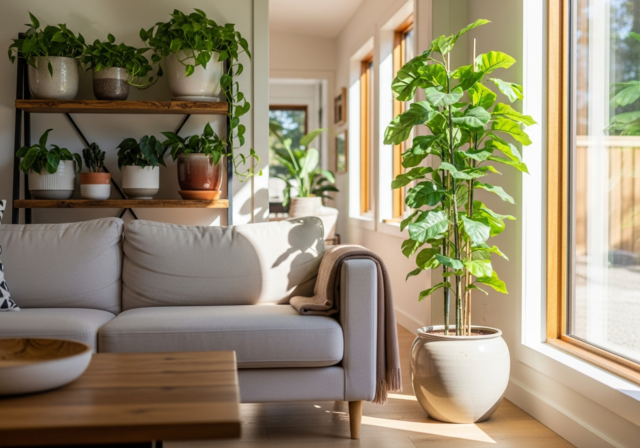
Good indoor plant design tends to follow one straightforward principle: anchor the room with a single statement plant, then build around it with smaller companions that add texture and layering. In a compact apartment living room, for example, a tall leafy specimen beside the sofa can fill an awkward corner and soften hard architectural lines, while a handful of smaller plants on shelves create depth without visual clutter. Scale and proportion are everything here—the aim is balance, not sheer quantity.
Creating Low-Maintenance Groupings
Grouping plants with similar light and watering needs is one of the smartest moves a busy plant owner can make. Compatible clusters also create subtle micro-humidity zones that benefit species preferring slightly higher ambient moisture.
Key Takeaway: Group plants with similar light and watering needs to cut down on guesswork and reduce the risk of over- or under-watering.
When selecting species, look for these hallmarks of a genuinely low-maintenance plant:
- Drought-tolerant, or at least forgiving of the occasional missed watering
- Shade-tolerant, capable of thriving in medium to low light
- Slow-growing, so repotting doesn’t become a constant chore
Evergreen foliage plants are especially well suited to year-round indoor displays—they hold their lush appearance across seasons without demanding complex seasonal adjustments.
Simple Care Routines That Make a Difference
Reputable houseplant guides agree on one rule above all others: test, don’t guess. Rather than watering on a fixed schedule, check soil moisture by pressing a finger or chopstick into the top inch or two of soil. Water only when that layer feels dry, then water thoroughly until the excess drains freely—and always discard any standing water left in saucers. Well-draining soil and containers with drainage holes aren’t optional; they’re essential for preventing root rot, which remains one of the leading causes of houseplant decline.
Quick Routine Checklist
– Check soil moisture before watering
– Assess light exposure and rotate pots for even growth
– Wipe dust from leaf surfaces to keep them healthy
– Inspect for yellowing leaves or early signs of pests
Planning the Layout
Start by identifying one or two natural focal points in the room—an empty corner, a wall near a window—and work outward from there. Position larger plants where they won’t interrupt traffic flow, and place smaller ones at eye level on shelves or side tables. Leave breathing room between plants for both visual clarity and air circulation. Even in a home office, a single tall corner plant, a medium plant near the desk, and a small shelf plant can create a noticeably calmer atmosphere—provided all three share similar light requirements.
Creating a Sustainable Indoor Green Space You’ll Actually Keep
Lush, calming interiors don’t require elaborate setups or rare species. Start with just a few plants, watch how they respond to your specific light and temperature conditions, and adjust placement and routines as you go. Losing a plant or two along the way is completely normal—it’s part of building real, hands-on experience. Over time, the small daily rituals of checking soil moisture, rotating a pot, or wiping down a leaf become just as satisfying as the greenery itself.
Start with plants that match your environment, build simple care habits, and your indoor green space will thrive with surprisingly little effort.