How Home Water Systems Work
While many households connect to a municipal supply managed by a local utility, millions of homes rely on private wells that use well pumps to lift groundwater from underground aquifers into the home’s plumbing. Whether your source is a city main or a backyard well, understanding how your system works helps you spot problems early, communicate clearly with professionals, and keep your water safe and reliable.
Every residential water system follows the same basic path: source → treatment (if needed) → storage and pressure → distribution. In a municipal water system, the utility handles sourcing, treatment, and pressurization before water ever reaches your property line. In a private water system, those responsibilities largely fall to the homeowner.
Key Takeaway: All home water systems share four core elements—source, movement, storage and pressure, and delivery. Understanding each one makes troubleshooting far more straightforward.
Water Sources: Municipal Supply vs. Private Wells
Municipal water arrives at your home pre-treated and pressurized. At the point of entry, a meter, shutoff valve, and sometimes a pressure-reducing valve manage flow into your internal plumbing. Municipal systems must comply with national or regional drinking water standards set by recognized public health and environmental agencies. Backflow prevention devices at the entry point also protect the public supply from contamination that could originate inside the home.
Private wells draw groundwater from aquifers, and both water quality and pressure become the homeowner’s responsibility primarily. Key components include:
- Well casing and screen (structural support and a barrier against sediment)
- Pump (submersible for deep wells, jet pump for shallower applications)
- Pressure tank (stores water and stabilizes pressure throughout the system)
- Pressure switch (triggers the pump based on demand)
- Distribution pipes leading to fixtures
Consider a common real-world scenario: a rural homeowner notices that shower pressure fluctuates throughout the day. This often points to an undersized pressure tank or a pump struggling to maintain consistent output—both issues a licensed well contractor can accurately diagnose.
Pumps, Pressure Tanks, and System Controls
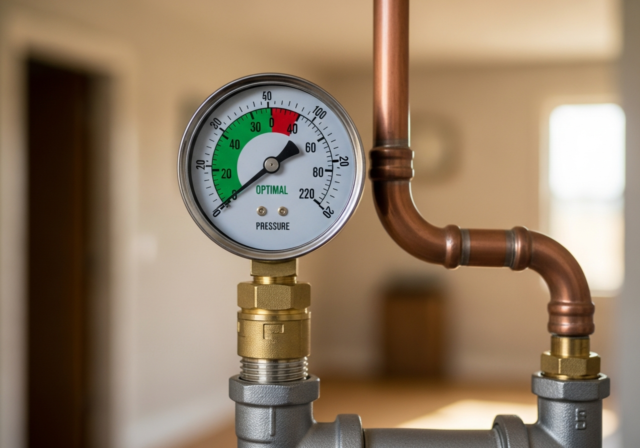
In private systems, the pump creates pressure and the pressure tank stabilizes it. Most residential setups operate within a cut-in/cut-out range—commonly 30 to 50 psi—where the pump kicks on at the lower threshold and shuts off once it reaches the upper one.
When a pressure tank is undersized or has become waterlogged, the pump cycles on and off too rapidly, a condition known as short-cycling. This accelerates mechanical wear and significantly shortens pump lifespan. Proper tank sizing is therefore one of the most protective steps you can take in maintaining a private water system. Pump selection also depends on well depth, static water level, and household demand—factors best evaluated by a licensed professional rather than estimated on your own.
Water Quality and Safety
Both municipal and private systems can face water quality challenges, though the causes and responsibilities differ considerably. Municipal utilities handle centralized treatment and routine testing; homeowners may add point-of-use or whole-house filtration to address specific concerns like taste or mineral hardness.
For private well owners, water quality testing is a personal obligation, not an optional one. Public health agencies generally recommend annual testing for bacterial contamination and key chemical parameters. Changes in pump performance or well integrity can directly affect water clarity and taste, so the two issues are more connected than they might seem.
Signs you should test your water:
– A sudden or persistent unusual odor or taste
– Cloudy, discolored, or sediment-laden water
– Recurring gastrointestinal illness among household members
Common Problems and How to Respond
Low or fluctuating pressure in a municipally connected home may stem from a clogged pressure-reducing valve, a partially closed shutoff, or corroded pipes. In a well system, a worn pump, failing pressure switch, or undersized tank is often to blame. A sensible first step is confirming all shutoff valves are fully open and checking inline filters for clogs—but if the issue persists, contact a licensed plumber or well contractor rather than attempting internal repairs yourself.
For discolored or odd-tasting water, stop drinking it until it has been properly assessed. Municipal customers should contact their utility directly; well owners should reach out to a certified water testing laboratory or well specialist without delay.
Routine Maintenance
- Know your main shutoff valve location and test it periodically to make sure it operates freely
- Schedule regular inspections of visible plumbing and, for well systems, pressure and electrical components
- Test well water at the intervals recommended by public health guidance
- Monitor changes in pressure gauge readings, pump noise, or energy consumption—any shift can be an early warning
- Protect exposed pipes from freezing in cold climates using insulation or heat tape
Staying on top of these basics pays off. Many homeowners have avoided costly failures simply by catching early warning signs—unusual pump cycling or a gradual pressure drop—well before a full breakdown occurred.
Bringing It All Together
Every home water system, whether municipal or private, relies on the same fundamentals: a reliable source, effective pumping and pressure management, safe distribution, and consistent quality control. Understanding these principles helps you recognize warning signs early, describe problems accurately to professionals, and make informed decisions about maintenance and repairs. Keep records of water tests, inspections, and completed work—and whenever issues involve pumps, electrical components, or water quality concerns, bring in a licensed professional. Informed homeowners are simply better equipped to protect one of their home’s most essential systems.